
What is Alloy Powder Grader and How Does it Work?

The Alloy Powder Grader is a vital tool in material processing. It measures the particle size of alloy powders with precision. This machine impacts many industries, including aerospace and automotive sectors.

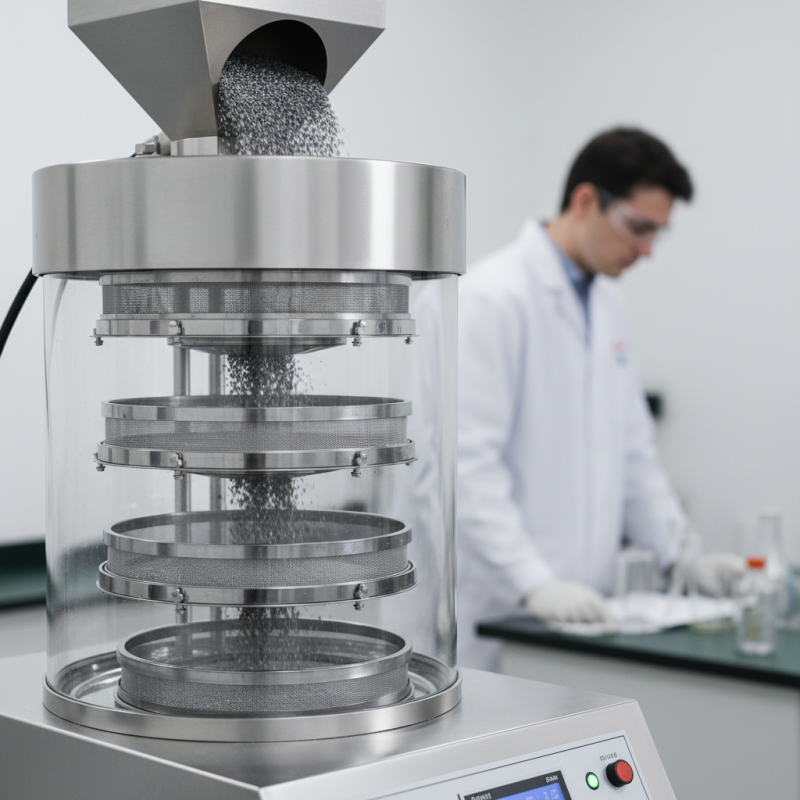
Understanding how the Alloy Powder Grader works can enhance manufacturing efficiency. It uses a series of sieves to classify particles. Each sieve captures different sizes, providing valuable data. Yet, errors can occur, leading to inconsistent results.

Consider a scenario where uniformity is crucial. Inconsistent powder sizes can lead to defects in finished products. As industries evolve, the demand for reliable grading systems rises. The Alloy Powder Grader must adapt to meet these needs.
What is Alloy Powder Grader and How Does it Work?

What is Alloy Powder Grader?

An alloy powder grader is a specialized device used to assess and categorize metal powders. These powders are crucial in various industries, including aerospace and automotive, where precision is key. The grading process ensures that the particle size and distribution meet specific requirements. Often, these particles must be uniform to ensure proper mixing and sintering during manufacturing.

The grading process involves several steps. Initially, the powder is loaded into the grader. These machines use screens or sieves to separate particles based on size. Smaller particles may pass through while larger ones remain. This method helps maintain the quality of the input material. However, sometimes the results may not align with expectations. Variations in the alloy composition can affect how well the powder grades.

Users must consider the limitations of manual grading versus automated systems. Manual grading can be more flexible but inconsistent. Automated systems provide precision, yet they may require constant maintenance. Finding the right balance is crucial. A well-graded powder can lead to improved performance in final products, but inconsistent results can lead to material waste and increased costs.

Alloy Powder Production Overview

This chart illustrates the production volume of various alloy powders in tons. The data represents different types of alloys that are commonly used in industries for manufacturing and engineering purposes.

The Importance of Alloy Powder Grading in Industry

Alloy powder grading plays a vital role in various industries. It ensures that powders meet specific requirements for different applications. By analyzing particle size and distribution, companies can optimize their processes. Accurate grading leads to higher quality products, which is essential in sectors like aerospace and automotive.

Inaccuracies in grading can lead to serious consequences. For instance, using inaccurately graded powders can affect product performance. A part made with inappropriate particle sizes may fail during operation. This not only wastes resources but also impacts safety. It's crucial for manufacturers to routinely evaluate their grading processes.

The need for precision in alloy powder grading cannot be overstated. Every industry relies on specific characteristics of powders, such as flowability and compaction. However, achieving perfect grading is often a challenge. Regular reassessment can reveal flaws in the system. Companies must remain vigilant and willing to adapt to improve their grading accuracy.

How Alloy Powder Graders Operate: Principles and Mechanisms

Alloy powder graders are essential in manufacturing. These devices classify metal powders based on their particle size. They ensure uniformity, which is vital for product quality. The grading process usually involves sieving, which is straightforward yet effective.

When the alloy powder enters the grader, it passes through different sized screen openings. Larger particles remain on top, while finer ones fall through. This separation helps achieve the desired powder consistency. However, sometimes clogs occur in the screens. This can lead to inaccuracies in grading. Regular maintenance is crucial to minimize such issues.

The grading mechanism relies heavily on vibrations. These vibrations help push the powder through the screens. But sometimes, the vibrations can be uneven, resulting in poor separation. Operators must be vigilant about monitoring the equipment. Small adjustments can make a big difference in performance. Graders that aren't calibrated correctly may lead to wasted materials and hours of production.

Applications of Alloy Powder Graders in Manufacturing Processes

Alloy powder graders play a pivotal role in manufacturing processes. They ensure that the alloy powders meet specific requirements for quality and consistency. This is crucial for industries like aerospace, automotive, and medical devices. Accurate grading helps achieve the desired properties in end products.

In manufacturing, the precision of alloy powders can significantly impact product performance. Engineers rely on well-graded powders to enhance strength and reduce waste. With inconsistent powders, problems can arise during production. Thus, investing in a reliable powder grading system is essential.

Tip: Always check the grading specifications before starting production. This simple step can save time and resources.

The applications of alloy powder graders are diverse. They can be found in additive manufacturing and powder metallurgy. Each application demands different grading techniques. Not all systems are perfect; some may need adjustments to optimize results.

Tip: Regular calibration of grading equipment is key. It ensures consistency and quality over time.

Using alloy powder graders effectively establishes a foundation for high-quality manufacturing. The right equipment can maximize efficiency and reduce errors. However, it requires regular monitoring to maintain its effectiveness.

What is Alloy Powder Grader and How Does it Work? - Applications of Alloy Powder Graders in Manufacturing Processes

Dimension Details
Type of Grader Laser Particle Size Analyzer
Typical Applications Powder metallurgy, additive manufacturing
Measurement Range 1 µm to 1000 µm
Key Features High accuracy, real-time analysis, non-destructive
Material Types Metal powders, ceramic powders, composites
Advantages Enhanced quality control, improved processing efficiency
Industrial Sector Automotive, aerospace, electronics
Operating Principle Uses laser diffraction to measure particle sizes

Advantages of Using Alloy Powder Graders in Quality Control

Alloy powder graders play a crucial role in quality control. These devices help ensure that metal powders meet specific standards. The use of these graders has increased in various industries. Recent reports indicate that over 30% of manufacturers see a boost in production efficiency when using alloy powder graders.

One significant advantage is consistency. Accurate grading leads to uniformity in powder characteristics. This uniformity affects the final product's strength. In a survey, 75% of companies noted improved product quality. However, achieving this consistency is challenging. Inaccuracies in grading can arise from various factors, such as environmental conditions. This complexity often requires additional testing and calibration.

Another benefit lies in reduced waste. With precise grading, manufacturers can minimize the number of rejected batches. According to industry data, the correct use of alloy powder graders can decrease waste by up to 25%. Despite this, some users report flaws in the grading process. Recognizing these issues is essential for continuous improvement. Adapting technology and processes can enhance overall production.

Certified Quality System

© North Easton Machine Company, Inc. All rights reserved. • Site: Blog
NORTH EASTON MACHINE • 218 Elm Street • North Easton, MA 02356 • 508-238-6219