
2026 Top Dumper Tracks for Global Buyers?

Choosing the right Dumper Tracks in 2026 requires more than comparing prices and tread patterns. Global buyers need equipment that matches terrain, load demands, machine weight, and working hours. A track that performs well on a dry quarry floor may struggle in wet clay or steep construction sites. Small differences matter.

This guide examines leading Dumper Tracks for international purchasing decisions. It considers rubber compound quality, steel reinforcement, tread design, vibration control, and expected service life. It also reviews supplier experience, production consistency, warranty terms, and replacement support. These details can reduce downtime when a loaded dumper moves across broken ground every day.

Real-world evidence remains important. Ask for dimensional drawings, machine compatibility data, inspection records, and clear installation guidance. Reliable manufacturers should explain their testing methods instead of making vague performance claims. Independent reviews and verified customer feedback add useful perspective, although they are not always complete.

There is no universal winner.

A lower purchase price may look attractive, but premature cracking or poor fit can increase operating costs. Even premium tracks require correct tension, suitable storage, and regular inspection. Buyers should also confirm regional standards and import requirements before placing an order.

Some rankings may change as new compounds and tread designs enter the market. That uncertainty deserves attention. This overview offers a practical starting point, not a substitute for technical verification. By comparing measurable specifications with actual job conditions, global buyers can make a more confident and defensible Dumper Tracks decision in 2026.
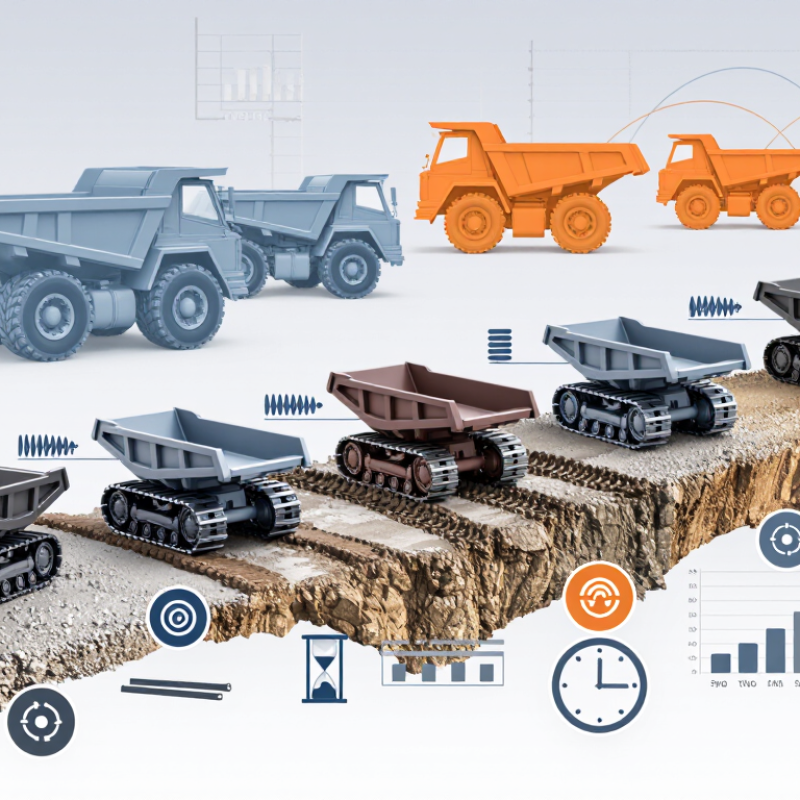
2026 Top Dumper Tracks for Global Buyers?

What Dumper Tracks Are and How They Support Off-Road Hauling

Dumper tracks are continuous track assemblies fitted to tracked dumpers. They replace conventional wheels with a wider contact area. This design spreads machine weight across soil, gravel, mud, and uneven ground. The result is lower ground pressure and steadier movement under heavy loads. Not magic. Traction still depends on tread pattern, track tension, machine weight, and surface moisture. In off-road hauling, this balance matters.

A tracked dumper can carry materials across soft construction roads, forest paths, and sloped work areas. Its tracks help reduce rutting and maintain forward grip when wheels begin to spin. Steel tracks usually tolerate sharp debris and severe abrasion. Rubber tracks often provide quieter travel and less surface damage. Neither option suits every site. Load limits, undercarriage clearance, turning habits, and local terrain should guide the decision. Operators should inspect rollers, sprockets, idlers, and track tension daily. A loose track may derail. An overly tight track can accelerate wear.

For global buyers in 2026, specifications should match climate, payload, transport width, and service access. Request documented dimensions, material details, warranty terms, and replacement procedures. Reliable suppliers explain compatibility instead of promising universal performance. Small differences in pitch or width can create expensive fitting problems. I would not choose by price alone. A cheaper track can become costly after repeated downtime. Even experienced teams sometimes underestimate ground conditions. That mistake deserves attention before purchase.

Key Dumper Track Types and Their Suitable Working Environments

2026 Top Dumper Tracks for Global Buyers?

Key Dumper Track Types and Their Suitable Working Environments

Global dumper buyers should match track design with ground conditions, not only payload. Fortune Business Insights valued the global construction equipment market at about USD 205.37 billion in 2023. That scale shows strong demand, but it does not make every track suitable for every site.

Rubber tracks suit muddy farms, landscaped areas, and finished surfaces. Their wider contact area helps reduce visible soil damage and vibration. They also steer smoothly around narrow access roads. However, sharp quarry stone can cut the rubber compound. That weakness is easy to overlook.

Steel tracks perform better on rocky slopes, demolition sites, and abrasive mineral ground. Their reinforced shoes resist punctures and tolerate repeated impacts. The trade-off is higher surface pressure and possible damage to paving. The U.S. Geological Survey’s 2024 Mineral Commodity Summaries reported continued global demand for crushed stone and construction aggregates. That supports the need for durable undercarriages near pits and processing sites.

Hybrid track systems can balance comfort and protection, but their maintenance needs vary. Buyers should inspect tread depth, track width, roller sealing, and replacement access. Field operators often focus on engine power first. I think that is a costly habit. A powerful dumper with the wrong track can sink, slide, or idle for hours. Site trials remain valuable, especially where soil changes within one workday.

2026 Top Dumper Tracks for Global Buyers? - Key Dumper Track Types and Their Suitable Working Environments

Dumper Track Type Main Construction Best-Suited Working Environment Traction and Ground Protection Durability Characteristics Typical Applications Key Limitations Buyer Suitability
Rubber Tracks with Standard Tread Reinforced rubber body with embedded steel cords and molded tread lugs. Mixed job sites, compact construction areas, landscaped surfaces, soil, gravel, and paved access roads. Good flotation and low surface pressure; produces less vibration and surface damage than steel tracks. Good resistance to normal abrasion and weathering; service life is affected by sharp debris, incorrect tension, and excessive heat. General material hauling, landscaping, utility work, farm access, and light-to-medium construction. More vulnerable to cuts, punctures, and prolonged contact with petroleum products or very sharp rock. A balanced option for buyers needing versatility, operator comfort, and reduced ground disturbance.
Rubber Tracks with Deep or Aggressive Tread Heavy-duty rubber track with deeper lugs, reinforced carcass, and steel cord structure. Mud, wet clay, loose soil, forest trails, steep ground, and off-road haul routes. Higher self-cleaning ability and improved grip on soft or uneven terrain; maintains relatively low ground pressure. Stronger lug resistance and better traction durability under demanding off-road cycles; still requires debris inspection. Earthmoving, drainage work, forestry support, wetland access, and construction on undeveloped terrain. Higher rolling resistance on hard surfaces and potentially faster wear when frequently used on concrete or asphalt. Suitable for buyers prioritizing traction, flotation, and mobility in soft or muddy environments.
Steel Tracks with Standard Grousers Steel track shoes, pins, bushings, and linked track chains, commonly with replaceable wear components. Rocky ground, demolition areas, quarry access, abrasive soil, and sites containing sharp material. Very strong penetration and mechanical grip; may create more ground marking and higher surface pressure than rubber tracks. High resistance to cuts, punctures, heat, and severe abrasion; individual components can often be serviced or replaced. Quarrying, demolition, heavy excavation, mining support, and severe-duty construction. More noise, vibration, maintenance requirements, and potential damage to finished roads or landscaped surfaces. Preferred when resistance to sharp rocks, impact, and extreme abrasion is more important than surface protection.
Steel Tracks with Wide Shoes Steel track assemblies fitted with wider shoes to spread the machine load over a larger contact area. Soft clay, saturated soil, peat, snow-prone routes, and low-bearing-capacity ground. Improved flotation compared with narrow steel shoes while retaining strong mechanical traction. Strong under impact and abrasion; wider shoes can experience increased bending stress if used on hard, uneven surfaces. Wetland construction, pipeline access, agricultural drainage, snow work, and soft-ground hauling. Less maneuverable in confined areas and may wear unevenly when operated continuously on hard ground. A practical choice where low ground pressure and steel-track strength are both required.
Rubber-Pad Steel Tracks Steel track base fitted with bolt-on or clip-on rubber pads that contact the ground. Sites requiring travel between rough ground and paved or finished surfaces. Retains much of the steel track's structural strength while reducing noise, vibration, and surface marking. Steel components resist severe impact; rubber pads are replaceable but can wear faster on abrasive pavement. Urban construction, municipal projects, road maintenance, utilities, and mixed-surface hauling. Higher purchase and component complexity than basic steel tracks; pads can loosen or deteriorate if poorly maintained. Well suited to global buyers operating across both off-road work zones and improved roads.
Low-Temperature Rubber Tracks Rubber compound and reinforcement system selected to retain flexibility in cold operating conditions. Cold climates, frozen soil, snow-covered routes, and seasonal construction sites. Consistent flexibility and traction in cold conditions, subject to tread design and ground conditions. Reduced risk of excessive hardening or cracking when the compound is correctly matched to the temperature range. Winter construction, remote infrastructure, forestry, snow removal support, and cold-region agriculture. Not automatically optimized for high-temperature operation, petroleum exposure, or highly abrasive rock. Recommended for buyers whose machines operate regularly below standard temperate conditions.
Heavy-Duty Reinforced Rubber Tracks Thicker rubber profile, reinforced steel cords, stronger tread blocks, and enhanced sidewall protection. High-cycle construction, rocky soil with moderate sharp debris, and demanding material-hauling routes. Higher resistance to track deformation and improved grip under heavy loads while preserving lower ground disturbance than steel. Designed for improved resistance to impact, chunking, lug tearing, and internal fatigue compared with standard rubber tracks. Commercial earthmoving, aggregate handling, site preparation, and long-shift dumper operations. Usually heavier and more expensive than standard rubber tracks; operating technique still strongly affects service life. A strong all-around option for buyers seeking a balance between durability, comfort, and ground protection.
Selection note: Track choice should be matched to the dumper's operating weight, undercarriage dimensions, sprocket and roller geometry, average load, travel speed, terrain, temperature, and maintenance conditions. Correct track tension and regular inspection are essential for service life.

Top Dumper Track Options for Global Buyers in 2026

Top Dumper Track Options for Global Buyers in 2026

Tracked dumpers are gaining attention where wheeled trucks lose traction. They suit muddy farms, steep construction sites, and narrow forestry roads. Grand View Research estimates the global construction equipment market will expand steadily through 2030, supported by infrastructure investment and equipment replacement. That growth does not make every tracked dumper a good purchase. Ground pressure, payload, and service access matter more than impressive brochure figures.

For global buyers, compact models with payloads from 1 to 3 tonnes offer practical flexibility. They can pass through gates, carry spoil, and reduce surface damage. Larger tracked dumpers, often rated above 6 tonnes, improve productivity on quarry and civil projects. Look for hydrostatic travel, a low loading height, and a rotating skip when operating beside trenches. The World Bank’s logistics performance research repeatedly highlights transport reliability as a major business factor. Parts availability should therefore be checked before price.

Engine emissions are another purchasing filter. The International Energy Agency reports that construction machinery remains a significant source of fuel demand outside road transport. Buyers should request tested fuel-consumption data, not only rated engine power. Operator visibility, emergency controls, and rollover protection also deserve inspection. I have seen machines selected for capacity but delayed by weak dealer support. That mistake is expensive. A quieter cab and simple daily greasing points may deliver more value than an extra tonne of payload. The choice still depends on local soil, climate, and repair skills.

How to Compare Load Capacity, Durability, Traction, and Maintenance

2026 Top Dumper Tracks for Global Buyers?

How to Compare Load Capacity, Durability, Traction, and Maintenance

Choosing a dumper starts with real payload, not a catalog headline. Check both struck and heaped capacity. A machine overloaded with wet clay may strain axles, brakes, and hydraulic cylinders. Measure the usual haul distance, ramp grade, and ground condition before comparing models. A compact dumper may work better on narrow sites. Bigger is not always better.

Durability depends on frame design, joint protection, and steel thickness. Inspect welds around the skip, articulation point, and suspension mounts. Look for clean hydraulic routing. Exposed hoses suffer quickly near rocks. Traction needs more than aggressive tires. Confirm axle clearance, differential behavior, and tire options for mud, gravel, or frozen soil. Test the dumper on a real slope, if possible. Short tests reveal a lot.

Maintenance can decide operating cost after purchase. Ask for service intervals, filter prices, grease-point access, and common replacement times. Open the engine bay with work gloves. Can a technician reach the filters without removing panels? That detail matters during winter repairs. Verify local parts support and technical training. A low purchase price may hide long downtime. My own comparison would still include operator feedback, because specifications miss vibration, visibility, and awkward controls. Some evaluations remain imperfect. Site conditions change faster than spreadsheets. Track fuel use and repair notes for several months before making a final fleet decision.

Global Buying Factors: Compatibility, Standards, Pricing, and Support

2026 Top Dumper Tracks for Global Buyers?

Global Buying Factors: Compatibility, Standards, Pricing, and Support

Choosing dumper tracks starts with accurate machine compatibility. Confirm track width, pitch, link count, sprocket profile, roller spacing, and frame clearance. A small mismatch can cause vibration, uneven wear, or installation delays. Check the machine manual and measure the existing track before ordering. Photos help, but measurements are more reliable.

Terrain changes the right specification. Rubber tracks suit paved yards and sensitive surfaces. Steel tracks may perform better on rocks, mud, and steep work areas. Review rated load, tread pattern, temperature range, and expected operating hours. Standards also matter. Ask for material details, dimensional tolerances, inspection records, and traceable test documents. Local machinery, safety, and import requirements should be checked before shipment. Requirements vary by country.

Pricing needs more than a unit quotation. Include freight, packaging, duties, installation tools, and possible downtime. A cheaper track can become expensive after early cracking or poor fit. In field checks, buyers often overlook sprocket wear. That mistake can damage a new track quickly. Support should include fitting drawings, maintenance guidance, warranty terms, and responsive technical communication. Request clear delivery dates and spare-part availability. Support is often judged after the sale. That is where some suppliers fall short. I would also allow time for unexpected delays, because global logistics rarely follows the first estimate.

Article Source:

Certified Quality System

© North Easton Machine Company, Inc. All rights reserved. • Site: Blog
NORTH EASTON MACHINE • 218 Elm Street • North Easton, MA 02356 • 508-238-6219