
10 Best CNC Equipment for Global Manufacturing
Global manufacturing is entering a more demanding era for Cnc Equipment. Buyers now evaluate more than spindle speed, cutting force, and purchase price. They also examine energy use, software compatibility, service coverage, cybersecurity, and operator training. A machine may look impressive on a showroom floor. Its real value appears months later, beside a warm spindle and a full production schedule.
The International Federation of Robotics reported 541,302 industrial robots were installed worldwide in 2023. That figure shows how quickly factories are combining automation with machining systems. Deloitte’s 2024 Smart Manufacturing and Operations Survey also found that 86% of manufacturing leaders expect smart manufacturing to become a major competitiveness driver within five years. These findings support a broader shift toward connected CNC cells, predictive maintenance, and data-based quality control. Still, digital capability cannot repair weak process planning.
Peter Zelinski, editor-in-chief of Modern Machine Shop, has expressed a useful principle: “Automation is not a substitute for good process engineering.” That warning deserves attention. The best Cnc Equipment must match materials, tolerances, batch sizes, floor space, and workforce skills. A five-axis machine can reduce setups, yet it may create unnecessary cost for simple repeat work. A compact turning center may appear modest, but it can deliver remarkable consistency when properly supported.
This guide examines ten leading equipment categories and machine platforms for global manufacturing. It considers accuracy, flexibility, automation readiness, serviceability, and lifecycle value. The ranking is not absolute. Regional support, supply-chain reliability, and honest operator feedback can change the decision. Mistakes remain possible, especially when specifications look better than daily production reality.
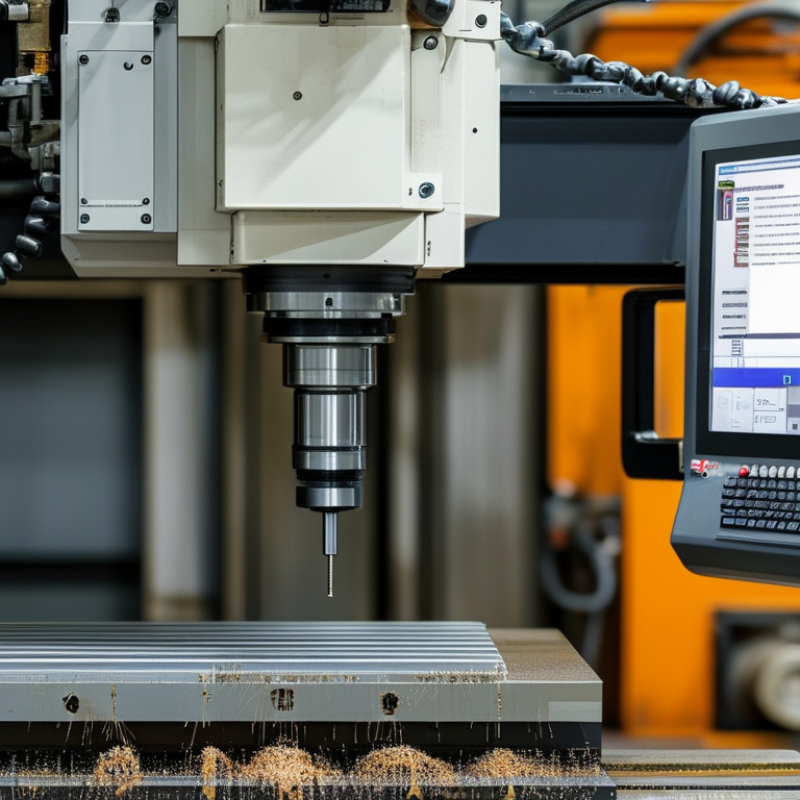
CNC Equipment Basics and Their Role in Global Manufacturing
10 Best CNC Equipment for Global Manufacturing
CNC equipment converts digital designs into repeatable cutting, drilling, turning, and finishing operations. A controller directs motors along programmed axes, while tools remove material with measured precision. Common equipment includes three-axis mills, five-axis machining centers, CNC lathes, turning-milling machines, grinders, electrical-discharge machines, routers, laser cutters, waterjets, and Swiss-type lathes.
Each machine solves a different production problem. Mills handle complex pockets and surfaces. Lathes produce accurate shafts and threaded parts. EDM machines cut hardened materials without direct tool pressure. Laser and waterjet systems process sheet materials, although heat distortion or slower cutting can affect results. The International Federation of Robotics reported 541,302 industrial robots were installed worldwide in 2023, showing how strongly factories value repeatable automation. CNC systems often provide the foundation for that automation.
However, “best” depends on tolerance, material, batch size, operator skill, and service access. A five-axis machine can reduce setups, but it may increase programming difficulty and maintenance costs. That trade-off is easy to underestimate. The U.S. National Institute of Standards and Technology emphasizes measurement, interoperability, and process control as key parts of reliable digital manufacturing. In practice, teams should inspect tool wear, calibration records, chip evacuation, and real cycle times before purchasing. A cheaper machine may consume more money through downtime. Small mistakes remain expensive.
| CNC Equipment Type | Primary Manufacturing Function | Typical Axes | Common Materials | Typical Tolerance Range* | Best-Fit Applications | Key Advantages | Main Limitations |
|---|---|---|---|---|---|---|---|
| 3-Axis Vertical Machining Center | Uses rotating cutting tools to mill, drill, tap, and contour parts from the top and sides accessible to the spindle. | 3 linear axes: X, Y, and Z | Aluminum, steel, stainless steel, cast iron, brass, engineering plastics | Approximately ±0.025 to ±0.ท075 mm for many production jobs, depending on machine condition, tooling, and process control | General mechanical components, fixtures, plates, housings, brackets, and low-to-medium complexity parts | Versatile, widely available, comparatively simple to program, and cost-effective for many parts | Multiple setups may be needed for complex geometries; limited access to undercuts and angled surfaces |
| 5-Axis Machining Center | Performs milling and drilling while positioning the workpiece or tool at multiple angles in a single setup. | 3 linear axes plus 2 rotary axes | Aluminum, titanium, nickel alloys, steel, stainless steel, composites, plastics | Approximately ±0.010 to ±0.050 mm in controlled production conditions | Aerospace structures, medical implants, turbine components, molds, impellers, and complex contoured parts | Fewer setups, improved access to difficult surfaces, shorter cycle times, and better geometric consistency | Higher purchase and programming costs; requires skilled process planning and workholding |
| CNC Turning Center | Rotates a workpiece while stationary or driven tools remove material to create cylindrical and rotational features. | Usually 2 to 4 axes; live tooling may add milling capability | Steel, stainless steel, aluminum, brass, copper alloys, titanium, plastics | Approximately ±0.013 to ±0.050 mm for common turning operations | Shafts, pins, bushings, threaded parts, flanges, nozzles, and rotational housings | High productivity for round parts, repeatable diameters, and efficient chip removal | Less suitable for large flat surfaces or complex non-rotational features without additional milling functions |
| Swiss-Type CNC Lathe | Machines small-diameter parts while the material is supported close to the cutting tool by a guide bushing. | Typically 5 to 13 controlled axes | Stainless steel, titanium, brass, aluminum, nickel alloys, medical-grade polymers | Approximately ±0.005 to ±0.025 mm for suitable small-part operations | Medical screws, miniature shafts, connectors, precision pins, watch components, and electronic hardware | Excellent support for slender parts, high repeatability, and simultaneous multi-tool machining | More complex setup and programming; less economical for large-diameter or low-volume parts |
| CNC Mill-Turn Center | Combines turning, milling, drilling, tapping, and sometimes grinding in one integrated machine. | Commonly 6 to 12 or more controlled axes | Steel, stainless steel, aluminum, titanium, nickel alloys, brass | Approximately ±0.010 to ±0.050 mm, depending on the operation and machine configuration | Complex valves, pump bodies, aerospace fittings, hydraulic components, and parts requiring multiple machining processes | Reduces handling and setup errors; supports complete machining from a single workholding arrangement | High capital cost, complex programming, and potentially longer setup time for simple parts |
| Wire Electrical Discharge Machine | Uses controlled electrical discharges through a continuously moving wire to cut conductive materials without direct tool contact. | Usually 4 or 5 axes | Hardened tool steel, carbide, titanium, copper alloys, nickel alloys, conductive ceramics | Approximately ±0.0025 to ±0.015 mm for precision work | Stamping dies, punches, narrow slots, intricate profiles, and hardened components | Cuts hardened materials and very fine profiles with minimal mechanical cutting force | Only electrically conductive materials can be processed; cutting is relatively slow for thick sections |
| CNC Sinker EDM | Uses a shaped electrode and electrical discharges to erode cavities and detailed features in conductive workpieces. | Typically 3 to 5 controlled axes | Tool steel, hardened steel, carbide, copper alloys, conductive superalloys | Approximately ±0.005 to ±0.025 mm, depending on electrode design and finishing passes | Injection molds, die-casting dies, deep cavities, sharp internal corners, and fine surface details | Produces complex cavities and sharp features in hardened materials without conventional cutting forces | Requires electrode fabrication; material removal is slower and surface finish may require additional passes |
| CNC Router | Uses a high-speed rotating spindle to cut, engrave, drill, and profile sheet or panel materials. | Usually 3 axes; 4- and 5-axis versions are available | Wood, MDF, plastics, foam, aluminum, composite panels, and non-ferrous sheets | Approximately ±0.05 to ±0.25 mm, depending on machine structure, material, and work area | Cabinetry, signage, prototypes, architectural panels, packaging, furniture, and lightweight components | Large work envelopes, high cutting speeds, and efficient processing of sheet and board materials | Generally less rigid than metal-cutting machining centers; limited performance on hard metals |
| CNC Waterjet Cutter | Uses a high-pressure water stream, with abrasive particles when required, to cut sheet and plate materials. | Usually 2 to 5 axes | Steel, stainless steel, aluminum, stone, glass, ceramics, rubber, composites, and plastics | Approximately ±0.05 to ±0.25 mm, depending on thickness, cutting speed, and machine configuration | Sheet-metal profiles, architectural stone, composite panels, industrial gaskets, and heat-sensitive materials | Very low heat-affected zone, broad material compatibility, and no heat-induced metallurgical changes | Slower than some thermal cutting methods; abrasive management, water treatment, and taper control are required |
| CNC Laser Cutting Machine | Uses a focused laser beam to cut, engrave, or mark sheet and tube materials through localized thermal energy. | Usually 2 to 6 controlled axes | Carbon steel, stainless steel, aluminum, copper alloys, plastics, wood, and selected composites | Approximately ±0.05 to ±0.20 mm, depending on material thickness, machine calibration, and thermal conditions | Sheet-metal fabrication, electrical enclosures, brackets, signage, automotive panels, and rapid production work | High cutting speed, narrow kerf, automation compatibility, and efficient nesting of sheet layouts | Heat-affected zones can occur; reflective materials and thick sections may require specialized equipment and parameters |

Certified Quality System

 Find Your Solutions ▶
NORTH EASTON MACHINE • 218 Elm Street • North Easton, MA 02356 • 508-238-6219